It was good while it lasted
“I no longer love your mouth
I no longer love your eyes (…)
Your mouth. Your eyes.
The way you hold your pens and pencils.
I no longer love it.”
— Laurie Anderson, “Sweaters”
“Adiós muchachos, compañeros de mi vida,
barra querida de aquellos tiempos.
Me toca a mi hoy emprender la retirada
debo alejarme de mi buena muchachada.”
— Carlos Gardel
Dear International Herald Tribune,
I have been a long-time reader of the IHT – probably for well over twenty years: I must have started buying it daily in 1985, upon my arrival in France. While I was living in the US, there was a plethora of good newspapers in English, and I happened to enjoy measuring up to the NYT crossword puzzles – which, to my delight, were also available in your newspaper. Prior to that blessed period, I used to read the Jerusalem Post, which was then almost as good reading as Haaretz (which is as good as ever, now as then) but not quite; besides, that was before it started inexorably veering to the right and sliding down, and anyway, its crosswords were too British for my taste.
The IHT had other virtues which made its reading a pleasure: good articles from a variety of sources: a few but good local journalists, and many features from the NYT and from its partner in the venture, the Washington Post – in the blessed times that it was run by Katharine Graham; now that she is dead and that it is said to be turning neocon (yet it prominently publishes today George McGovern’s call to impeach Bush and Cheney), you kicked them out of the partnership. You’re thus becoming a closer but still quite pale clone of the NYT. Too bad you didn’t bring in the Los Angeles Times in lieu of the WP. I guess I was too hooked to kick the habit then.
But the last straw was thrown at me a few days ago, when the owner of my regular newsstand told me that, starting tomorrow, the price of a single issue would increase from 2.20€ to 2.50€. This is the combined costs of Le Monde (usually too arrogant for me, but quite good crosswords, albeit in French) and of Libé (the only left-leaning daily left in France)! This raise, together with the new weekend supplement, shows you’re increasingly catering to the upper crust and the jet set. I am not part of either, so it is time for us to part.
The internet is everywhere. I could just read online any one of the infinitely-many identical copies of any article of interest which multiply like swarms of locusts from newspaper to newspaper. Yet I find I still need a paper copy, something to hold in my hands, which has a finite size, which I can read while walking on the streets or stand in the métro, start and finish, tear parts of to file away, to pass on to a friend or to wrap something in. Or even to write on. As to the crosswords, rather than do them online, I’ll buy the books of collected puzzles the NYT publishes: fifty or more for the new cost of a couple of IHT issues, that’s quite a good deal, isn’t it. So:
“Dear Amigo… Dear Pardner…
Listen. I just want to say thanks. So… thanks. Thanks for all the presents. Thanks for introducing me to the Chief. (…)
Oh and uh… thanks for letting me autograph your cast.
Hug + kisses
Oh yeah. P.S.
I… I feel like – feel like – I am – in a burning building –
And I gotta go.”
— Laurie Anderson, United States
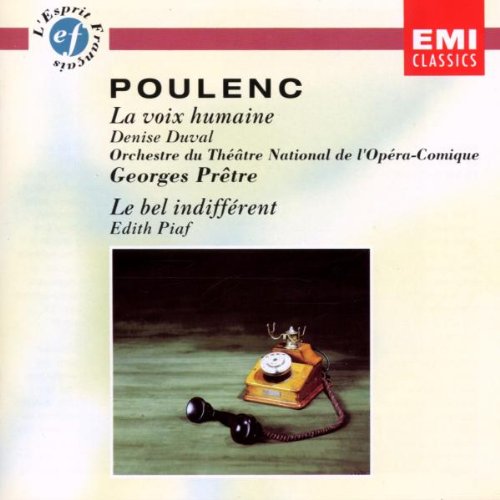 Tout objet se prête à des usages imprévus par ses inventeurs. Il n’a pas fallu attendre le minitel ou l’internet – avec ses courriels puis ses clavardages1 – pour
  Le compositeur
  Les textes des chansons de Laurie Anderson sont encore plus étranges et extraordinaires que sa musique. Ils dénotent un sens aigu de l’observation, la capacité à trouver des analogies surprenantes entre des phénomènes apparemment distincts, une familiarité avec le patrimoine littéraire et culturel qui ne peut être due qu’à leur longue fréquentation – qualités qu’elle met au service du regard critique qu’elle porte sur la modernité et sur ses aspects aliénants et mortifères, et qu’elle illustre avec une ironie cool et pince-sans-rire en s’accompagnant de technologies sophistiquées, fruits de cette culture qu’elle analyse lucidement.
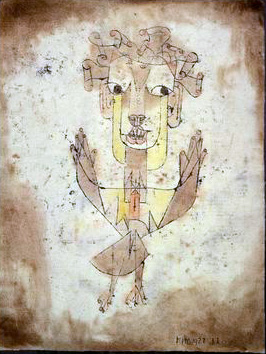 IX. A Klee painting named “Angelus Novus” shows an angel looking as though he is about to move away from something he is fixedly contemplating. His eyes are staring, his mouth is open, his wings are spread. This is how one pictures the angel of history. His face is turned toward the past. Where we perceive a chain of events, he sees one single catastrophe which keeps piling wreckage and hurls it in front of his feet. The angel would like to stay, awaken the dead, and make whole what has been smashed. But a storm is blowing in from Paradise; it has got caught in his wings with such a violence that the angel can no longer close them. The storm irresistibly propels him into the future to which his back is turned, while the pile of debris before him grows skyward. This storm is what we call progress.