Miklos
« Je donne mon avis non comme bon mais comme mien. » — Michel de Montaigne

This blog is © Miklos. Do not copy, download or mirror the site or portions thereof, or else your ISP will be blocked. 

13 avril 2011

Pythecanthropus Q.

Classé dans : Littérature, Nature, Photographie, Sciences, techniques — Miklos @ 22:51

Je vous présente le Pithécanthrope, le Singe-homme découvert en 1894 par Eug. Dubois, médecin militaire hollandais, dans une exploration géologique de Java. Vous pensez bien, n’est-ce pas? qu’une telle présentation ne se fait pas dans les formes ordinaires. Le pithécanthrope est très vieux, très cassé, très abîmé par l’âge et les accidents divers.

Georges Clemenceau, « Par monts et par vaux : VI. Le Pithécanthrope », Au fil des jours. Fasquelle, Paris, 1900.

La question qui provoque les spécialistes est de savoir s’il existait « une conceptualité chez les pithécanthropes » ?

Emmanuel Anati, La religion des origines. Bayard Editions, Paris, 1999. Cité par Dan Semenescu, Apparition des formes urbaines. Institutions symboliques et structures maté­rielles au Sud-est de l’Europe. Zeta Books, 2008.

Je me sens plus près de ces observateurs des temps anciens que de ceux de mes contemporains qui pratiquent la religion du progrès technologique. Quand on lui a appris qu’un Anglais appelé Darwin venait de découvrir que l’homme descend du singe, Victor Hugo a eu ce commentaire :

Et quand un grave anglais correct, bien mis, beau linge,
Me dit : — Dieu t’a fait homme et moi je te fais singe 
Rends-toi digne à présent d’une telle faveur ! —
Cette promotion me laisse un peu rêveur
.

Le singe au moins était un animal. Quand on m’apprend maintenant que je dois me réjouir de ressembler à une machine, si complexe soit-elle, et que c’est à ce prix que je ferai le saut dans une espèce plus évoluée que l’homme-singe, cette promotion m’enlève mes derniers rêves.

Jacques Dufresne, Après l’homme…le cyborg ? Éditions MultiMondes, Sainte-Foy (Québec), 1999.

Alors, si vous le voulez bien, et avant d’entrer dans le vif de notre sujet, j’aimerais vous faire part de mes conclusions dès maintenant, soit de manière anticipée.

Lacanaillerie oblige, je le fera après quelques mesures du Lac des cygnes de Tchaïkovsky.

Dire de l’homme qu’il descend du singe ne se situe pas sur le même plan que de dire qu’il descend du signe ou du songe.

Bernard Golse, « Les débuts de la pensée, ou, l’homme descend-il du signe ? », in Michel Soulé et Boris Cyrulnik, L’intelligence avant la parole. Nouvelles approches originales du bébé. ESF éditeur, Paris, 1998.

6 février 2011

Erreur capitale

Classé dans : Actualité, Médias, Sciences, techniques — Miklos @ 23:17

L’émission Capital de ce soir explique ce que sont des disques durs (non, il ne s’agit ni des vinyles ni des problèmes de colonne vertébrale chez les sédentaires) au public de non-initiés (la contemporanéité n’étant composée que de communautés d’initiés, si on n’en est pas c’est qu’on est sûrement déficient quelque part) que nous sommes : une voix convaincante, des mots simples très articulés, des italiques partout : une offre à cinq euros par mois, il a plus d’un million de clients, une histoire incroyable trop belle pour être vraie, l’accès aux données confidentielles de l’armée américaine, les pirates s’attaquent à chacun d’entre nous. Et j’en passe.

On ne demande qu’à être éduqués tout en étant épatés, qu’à être convaincus, émerveillés et apeurés devant ce vertige de la modernité qui nous tend ses bras, en chantonnant pour nous rassurer, avec Laurie Anderson, So hold me, Mom, in your long arms. So hold me, Mom, in your long arms. In your automatic arms. Your electronic arms. (“O Superman”, 1981)

Et voici que la Voix nous apprend qu’une image est stockée sur ces fameux disques durs sous forme d’une suite de zéros et de uns, qui défilent à l’écran à toute berzingue. Elle précise : « une série de 0 et de 1 : ce sont les octets. » Et continue, comme une bonne ménagère, avec les kilos, puis passe tel le physicien nucléaire aux mégas et enfin comme l’astronome aux téras. Octets.

Problème : les 0 et les 1, ce ne sont pas des octets mais des bits (attention au genre et à l’orthographe de ce dernier mot). On n’a pas besoin d’être initié pour s’imaginer qu’octet désigne quelque chose qui a rapport avec le chiffre « 8 » (un octogone, un octuor, des octanes… ; bon, « octobre » est le 10e mois, mais il ne l’était pas toujours). Effectivement, un octet désigne un groupe de huit bits. Et donc, si votre disque dur fait 100 mégaoctets, il peut stocker 800 mégabits. Simple, même pour un non initié ! Où l’on constate aussi qu’il est plus commode (mais moins impres­sionnant) de parler d’octets ou d’euros que de bits ou de centimes.

Quant à bit, ce mot a deux sens, selon son origine : avant l’émergence de l’informatique, il désignait un trépan utilisé dans l’industrie diamantaire, et est attesté dès 1875 ; depuis la révolution informatique, il dénote le 0 ou le 1 utilisés exclu­si­vement pour coder toute information numérique. On retrouve ce type d’homonymie dans mail (le maillet/le courrier), email (la matière/le courrier élec­tronique)…

Pour en revenir à M6, on serait donc en droit de se poser des questions au sujet du niveau de compétence du journaliste qui a préparé l’émission. Si quelqu’un se dévoue pour l’initier (« enseigner à quelqu’un les rudiments d’un art, d’une science, d’une technique… »), qu’il n’hésite pas. Quant à une autre séquence de l’émission de ce soir, consacrée aux tests ADN, elle avait déjà été diffusée en février, puis en mai, 2010 (bien que le site de l’émission se garde de le mentionner). Elle doit donc faire partie du capital de la chaîne…

On concluera en retournant vers Laurie Anderson, qui a su si bien s’approprier la technologie pour mieux la critiquer, et qui illustre ici le sens profond de ces 0 et 1.

14 novembre 2010

Mais où va Le Monde, ou, quand le temporaire s’installe

Classé dans : Actualité, Sciences, techniques — Miklos @ 16:27

On en avait déjà parlé, en 2007, Le Monde migrait avec peine et effets secondaires tous les blogs de ses utilisateurs vers Wordpress, un excellent gestionnaire gratuit de blogs (que nous utilisons dans plusieurs autres contextes).

Depuis, cela claudique, c’est le moins qu’on puisse dire. Les modifications apportées depuis dans ce logiciel pour son adaptation se soldent souvent en des restrictions incompréhensibles par rapport aux fonctionnalités de Wordpress et aux normes du Web, voire carrément en de fort désagréables disfonctionnements de tous ordres.

Est-ce pour donner aux auteurs l’impression qu’ils sont entendus, un service permettant de signaler les problèmes a été mis en place. Mais il n’est pas compétent sur le fond, et, de toute façon, c’est comme ça, take it or leave it.

Depuis un mois, c’est ce service qui ne marche plus : le formulaire de saisie des messages ne permet plus de les faire partir. On a alors envoyé quelques courriers pour signaler ce nouveau problème à la rubrique Contact en ligne du Monde. Aucune réponse. Ils n’ont d’ailleurs jamais répondu non plus à un mail (puis à un courrier en bonne et due forme à leur médiateur) où on protestait du droit qu’ils s’étaient arrogés de changer le texte d’un commentaire à un article du Monde

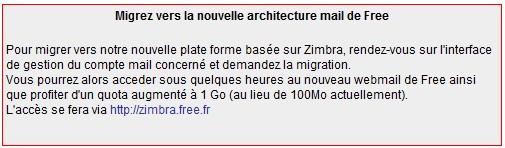
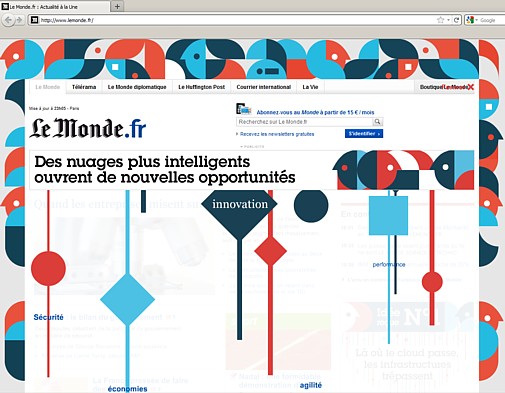
Et depuis la semaine dernière, c’est la plate-forme de blogs qui a pris un sérieux coup dans l’aile : injoignable pendant plus de 24 heures (on tombait sur l’écran ci-dessus), et, depuis, cela se reproduit par intermittences (avec le grand message d’excuses ci-dessus, ou, plus succinctement, File not found). À son retour, des « éléments composants le blog (photos ou sons) ont été effacés lors de cet incident » : ça sent la panne d’un disque jamais sauvegardé (les éléments en question mis en ligne il y a plusieurs années).

On aurait pu espérer qu’avec les changements de propriétaires, Le Monde bénéficierait de nouveaux moyens qui, entre autres, amélioreraient aussi cet aspect des choses. Que nenni.

31 octobre 2010

Le monde à l’envers

Classé dans : Actualité, Publicité, Sciences, techniques, Société, Économie — Miklos @ 12:42

En ces temps de crise, on est agréablement surpris de voir de nouveaux services en ligne qui veillent à décourager la fidélisation pour nous éviter la cyberadiction, épidémie qui frappe nos sociétés post-industrielles autant que le réchauffement climatique et qui affecte potentiellement toute personne âgée de 7 à 77 ans (après il faut de telles lunettes qu’on ne peut plus).

Regardez attentivement cette offre (que nous n’identifierons pas, nous ne sommes pas une agence de pub) : plus la durée de l’abonnement choisi est longue, plus le coût mensuel – la somme en grand suivie en petit de la mention par mois – est élevé (les « crédits » aussi, mais ils n’ont aucune signification commerciale, il s’agit d’une possibilité négligeable de faire valoir sa marchandise sur ce service). On ne peut qu’être admiratif devant cette stratégie qui a pour cible notre bien-être mental tout en combattant l’inflation des coûts. Mais ce n’est pas tout.

L’information en tout petit (dans toute bonne publicité il y a toujours quelque chose qu’on ne peut pas lire sans utiliser un microscope électronique) renforce cet encouragement à ne pas prendre les abonnements à longue durée : sous le 29€95, il est écrit « par mois, soit 0,08€ par jour » ; un calcul mental rapide nous montre qu’il s’agit en l’occurrence de mois de 374 jours (ce qui ne peut que nous rappeler la belle et triste nouvelle de Marcel Aymé, « La Carte », dans Le Passe-muraille, et qui relate un marché noir autour de cartes de rationnement bien particulières pendant la guerre : chacune donne droit à une journée, et ainsi, certains en arrivent à « vivre » bien plus de 30 jours par mois, tandis que d’autres n’y sont que pendant quelques jours, le reste passé dans les limbes) – c’est le comble du « travaillez plus… » (vous connaissez la suite).

Ceux qui veulent travailler moins (d’autant plus que la retraite s’éloigne plus on s’en rapproche, on se croirait chez Alice de l’autre côté du miroir) préfèreront la formule à 9€95 par mois : sous-titrée « soit 0,33€ par jour », elle correspond à un mois bien moins pénible de 30 jours.

Quant à la formule intermédiaire (19€95/mois), elle convient, comme il se doit, aux intermédiairement speedés, ceux qui vivent 181 jours par mois.

Pour les esprits mal tournés qui nous écriront d’un ton, pardon d’une plume, revêche que c’est le « par mois » qu’il faut ignorer, et que le chiffre indiqué est le coût total de la formule dont la durée est précisée au-dessus (donc : c’est 29€95 pour une année entière, 19€95 pour 6 mois, etc.), on répondra calmement (mais fermement) que lors d’un achat, ce qui compte c’est ce qui est écrit dans les conditions de vente, et l’on conclura avec cette devise toujours vraie depuis que l’homme est homme (donc commerçant) : Caveat emptor.

30 octobre 2010

On bringing Europe’s cultural heritage online

Classé dans : Actualité, Littérature, Livre, Musique, Sciences, techniques — Miklos @ 5:01

This text is an expanded version of a position paper and an oral statement to the Comité des Sages at their public hearing on 27 November 2010.

Introduction

The younger generations listen to music all the time, yet, as Jill Cousins has pointed out in her statement to the Comité des Sages, only 2% of Europeana is musical contents. This has got to change.

I live in a black hole, that of an archive of unpublished recordings of live performances of contemporary art music: this raises specific barriers in identifying and obtaining the rights to digitize and make available these documents on the Web on our own sites and all the more so to communicate them to Europeana.

I also live in a no-man’s-land squeezed out from the public-private dichotomy, namely that of the not-for-profit private organizations: they don’t benefit from full government financial support1 on the one hand, and can’t develop commercial or marketing strategies on the other hand. This limits their capacity to raise adequate funds to digitize their collections.

One of my tasks at IRCAM has been to design and operate the Portal of contemporary music resources in France, a project which has been partially financed by the French Ministry of Culture. It is a partnership of more than thirty providers – archives, libraries, museums, conservatories, music ensembles, centers for contemporary music… -, all but a couple of which are not-for-profit organizations, all with interesting and sometime unique music archives2 of contemporary works but most without librarians, archivists or specialists of computers and digitization. Most are small – in size and in budget – and appreciate the added visibility such a portal provides to their heritage, and don’t see it as a threat.

This Portal aggregates all the information about their holdings and the events they organize, whether or not that information points to actually digitized documents: this allows localizing relevant resources, such as books, periodicals, music scores and archival documents, which might never be digitized in a foreseeable future. We believe that cultural heritage is not only digital cultural heritage, echoing the concern voiced earlier today by Lucie Verachten from the Belgian Archives, and so “bringing it online” must include also bringing online metadata with no associated data.

This is not what Europeana does (unfortunately, in my opinion). As a consequence, this Portal, which is harvested by Europeana, provides it only with those records pointing to digital resources made available by our partners. Yet, we can’t let Europeana access our audio digital items, nor even just provide thumbnails for them.

How come? The exceptions to the 2001 Directive on the harmonisation of certain aspects of copyright and related rights in the information society3 and the Commission’s recommendation of 24 August 2006 on the digitisation and online accessibility of cultural material and digital preservation4 do not go far enough in addressing some aspects more specifically related to networked digital libraries, to archived musical material and to the kind of cultural institutions that can benefit from exceptions.

I’ll briefly address three implications of this problem, which creates barriers to bringing Europe’s cultural heritage online.

1. Copying for the purpose of indexing and semantic enrichment.

Contrarily to other major digital libraries such as Gallica, Hathi Trust, the Gutenberg project, Scribd or Google Books, Europeana cannot provide full-text search into the many digitized books which it references, but only in its metadata.

Why this limitation? Europeana, as a networked library, does not contain (in its computers) these documents while these digital libraries do. The current laws and their exceptions do not automatically entitle Europeana to make a copy of them from their holders, its content providers and aggregagors, although these documents are already made available either publicly on their web sites or on dedicated terminals on their premises.

This is a very serious disadvantage, as it means that Europeana is, in effect, not more than a large catalogue (of digital objects for sure), but not a full-fledged digital library. Were it able to access the contents, it could not only provide that missing important search feature, but also semantically enrich the collection in many innovative ways arising from the analysis of the contents rather than just of its metadata.

One could envision a more generous exception that would allow Europeana and similar cultural digital libraries – in public institutions and not-for-profit private organizations (which are not mentioned in the exception, see note 5) – to make a temporary copy of the documents5 – even copyright-protected documents – so as to allow for their full indexation and meaningful semantic enrichment: as a result, a search for a phrase (say) would return the lists of the books in which this sentence can be found, and allow the public to access these books on their provider’s sites if publicly accessible (partially or totally) or just identify where in the books the search phrase can be found (as Google Books does for books under copyright).

Such an exception should also cover non-textual material, i.e., sound and audiovisual cultural material (contrarily to the opinion of one of the earlier speakers today). Many techniques of information retrieval are already applicable to musical (and other audio) contents.

2. Rights clearance for musical sound archives

Several speakers, and in particular Renate Dörr from the ZDF, have already addressed some of the especially difficult aspects of clearing the rights needed to digitize and make available musical sound recordings. In her subsequent statement, the representative of the AEPO, Guenaëlle Collet, asserted that this was always feasible, and that the rights collecting societies had the knowledge and resources to help doing so. This is probably true (to some extent at least) for commercial recordings, yet is far from being so for unpublished, archived contents.

In order to be able to digitize their own sound archives and make them available on “dedicated terminals on their premises”, our content providers have to go through a sometime endless and impossible process of identification of all rights holders, all the more difficult when it concerns large archives and when the holders – small cultural organizations such as musical ensembles – do not have, and never had, archivists or librarians who would have thought of, and known how to, keep exceedingly detailed records: they don’t have a publisher to turn to, and have to do the work themselves.

Consider, e.g., a recording of a live concert of 30 years ago that they performed or produced: they would have to identify not only the works and the composers (that’s usually not a problem), but also all the soloists and performing musicians which sang or played on that date in the orchestra or sang in the choir, the publishers of the scores that were used then (it is sometimes impossible to determine as well: some premières might have been played from manuscript scores before their subsequent publication) and if the published score had been bought or rented for that performance…

This in effect prevents them clearing up the rights fully, and is one of the two principal causes for the scarcity of digitized sound heritage, the other one being the high digitization costs, which small institutions can’t afford, all the more so when they are not-for-profit private ones (whence the pressing need for increased public support, as Ben White from the British Library already mentioned).

My recommendation would be to address this barrier by e.g. extending the principle of, and dispositions for, orphan works to sound and audiovisual material6 (to echo Ben White again), or, alternatively, to allow for collection-level rights management (rather than on an individual-archive basis) or even global licences in such cases.

3. Music thumbnails

When one launches a search in Europeana, the results pages show, for each found item, a thumbnail with a descriptive, textual subtitle. This is at least true of text (typically: a small image of a page), of a still image (a reduced view of it or of part of it) and of video (a frame). But in the case of music, there is no general method or algorithm to produce a visual display, all the more so for a sound archive without any accompanying printed documentation7.

Yet it is technically feasible to produce automatically a sound excerpt, and to embed a player (displayed as a play button) of any size – in this case the size of the vignettes used by Europeana – in the results pages. By clicking on this player, the user would be able to listen to this excerpt. This could significantly enhance the search and discovery experience in Europeana by making digital sound recordings “equal citizens” to the other Europeana assets.

Yet while it is possible to provide free citations or thumbnails of text (and arguably of still images), it is definitely not the case for recorded music (as well as for printed music scores). In order to allow the users of our Portal to listen to such excerpts and get an idea of what the music sounds like (and looks like, for music scores), our providers have to pay an extra fee8 to the various rights collecting societies (authors, performers…), which they do.

But this does not allow them to make use of this excerpt on any other web site than their library’s and the Portal: even just in order to use an excerpt on another of their web site, they would have to pay an additional fee. As a result, they can’t allow Europeana to include this excerpt either in the results page or in the record page. So in addition to the scarcity of musical contents referenced by Europeana (see point 2 above), that which is there is not adequately “displayed”.

I would recommend addressing this barrier by e.g. extending the public interest exception for cultural non-commercial purposes to allow for free limited citations of musical (and audiovisual) works as it is the case for text (or at least for the free non-commercial reuse of such citations for which rights have been cleared for their first use). This would not be detrimental in any way to the composers and the performers. On the contrary, such excerpts act as promotional material, as the many messages to the Portal show: people who have listened to them ask where they can listen to the full work, where they can buy a commercial recording thereof or where they can buy or rent the score in order to perform the work.

Thank you.


1 The French Plan national de numérisation grants 100% of the budget of digitization projects to public institutions, but only up to 50% to private not-for-profit organizations.

2  Sound recordings, but also music scores, program notes, etc.

3  Related to preservation purposes, for the benefit of people with a disability and for research and private study on the premises.

4  To improve conditions for digitisation of, and online accessibility to, cultural material by” addressing the issue of orphan works, and “make provision in their legislation so as to allow multiple copying and migration of digital cultural material by public institutions for preservation purposes.

5 I had suggested such a mechanism in a 2005 letter to the then President of the French National Library, Jean-Noël Jeanneney (available here), in which I was outlining how such a networked digital library could be designed.

6 Fees would still be paid to rights collecting societies, and the monies would be put in escrow.

7 In the case of a commercial CD, the cover of the booklet may be displayed, e.g.

8 I.e., in addition to what they have already paid in order to digitize the sound archive and provide full access to in on dedicated terminals on site only.

The Blog of Miklos • Le blog de Miklos