Apéro virtuel II.14 – dimanche 15 novembre 2020
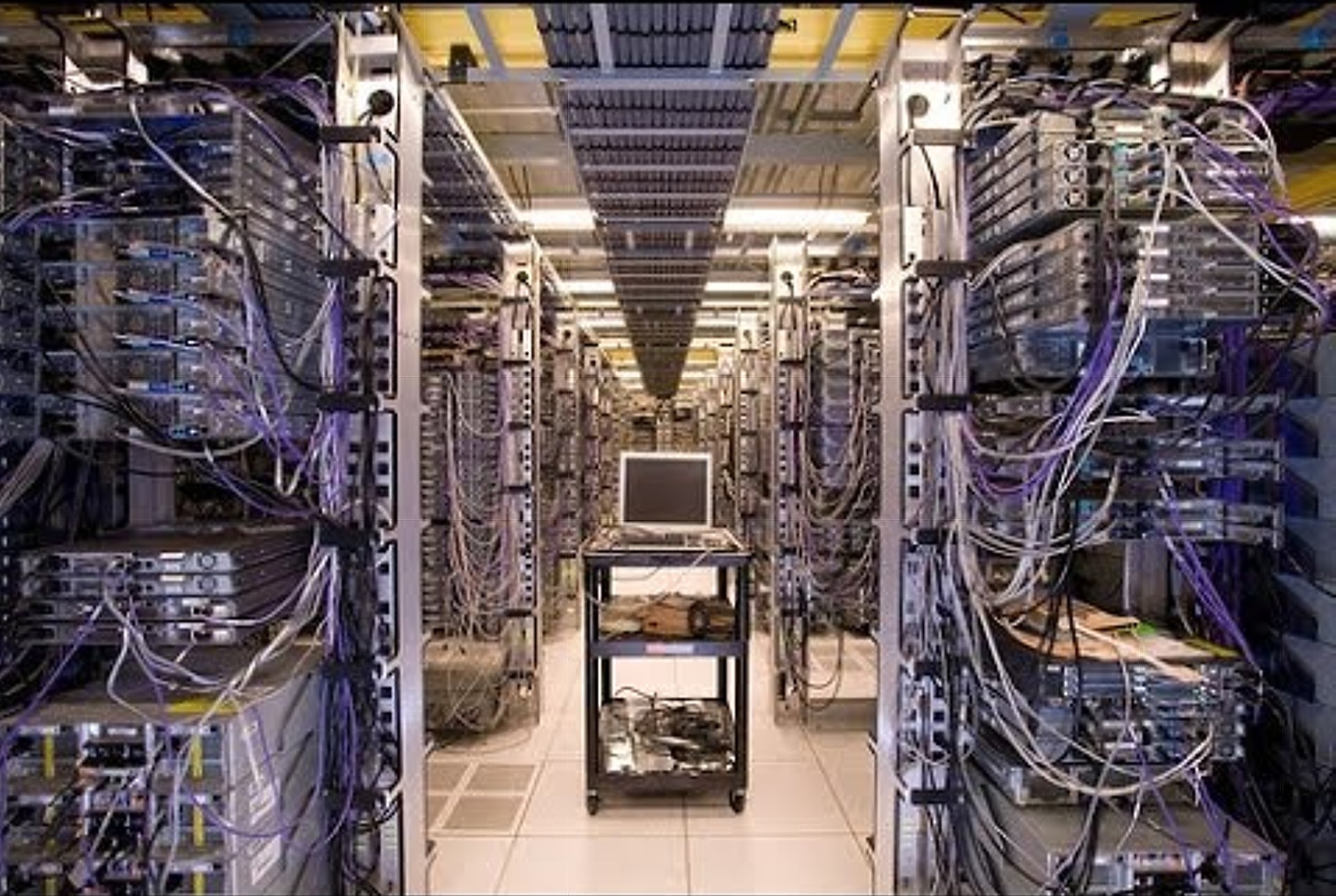
L’arrière-plan de Michel ayant suscité de l’étonnement chez Jean-Philippe (qui pense à Matrix) et Françoise (C.), il leur parle du premier ordinateur1 sur lequel il a travaillé professionnellement, à partir de 1972 (son premier cours d’informatique remontant à 1966) : alors qu’un ordinateur portable n’a que quelques centimètres d’épaisseur, et un téléphone portable se met dans une poche, cet ordinateur, d’une capacité de mémoire 100.000 fois moindre, nécessitait une armoire pour héberger ses circuits :  à l’époque, la mémoire était composé de tores magnétiques, petits anneaux visibles à l’œil nu autour desquels étaient enroulés des fils électriques qui servaient soit à les magnétiser dans un sens ou dans l’autre (ce qui correspondait à un 0 et un 1, respectivement), soit à lire le champ magnétique qui y était présent. Ce type de mémoire était évidemment aussi très volumineux en taille en comparaison par exemple à une carte SIM actuelle, mais permettait d’y garder l’information enregistrée pendant plusieurs années sans aucune alimentation électrique… Faculté d’autant plus nécessaire que cet ordinateur ne possédait pas de disque dur, et qu’on chargeait le programme initial à l’aide d’une bande de papier perforée (chaque trou correspondant à 0 ou 1), à l’instar des télex de l’époque3, et ultérieurement des cartes perforées. Malgré la taille très réduite de sa mémoire et l’aspect « primitif » de cet ordinateur, il était extrêmement rapide et permettait de réaliser en temps réel des simulations graphiques complexes sur 6 écrans en interaction avec 6 personnes.
 Michel continue en expliquant à quoi servent ces 0 et 1, en montrant comment ils peuvent servir à compter2 et à calculer tout aussi bien qu’avec les chiffres de 0 à 9 – c’est d’ailleurs le cas des bouliers, où chaque boule n’a qu’une position, en haut ou en bas, ou des doigts de la main (qui peuvent être soit pliés soit redressés). C’est ce qu’on appelle le système binaire, et il est encore utilisé dans tous les ordinateurs d’aujourd’hui (mais évidemment dans des circuits électroniques qui n’ont rien à voir avec ceux d’alors), et pas que pour coder des nombres, mais aussi des lettres et tout signe qui « entre » dans l’ordinateur. Françoise (C.) demande alors que veulent dire « 2 puissance 2, 4 puissance… », à quoi Michel répond que « 2 puissance 2 » (ou « 2 au carré ») est un raccourci pour dire « 2 multiplié deux fois par lui-même » (donc 2 x 2), « 2 puissance 3 » (ou 2 au cube ») voulant dire « 2 multiplié 3 fois par lui-même »(donc 2 x 2 x 2), « 4 puissance 2 » étant « 4 multiplié 2 fois par lui-même » (4 x 4), etc. Et 25 x 25 est donc appelé « 25 puissance 2 » ou « 25 au carré » (rappelant ainsi que la surface d’un carré de 25 cm de côté est de 25 x 25 cm²). Françoise (P.) dit avoir bien compris, mais ne sent pas qu’elle pourrait l’expliquer à d’autres, à quoi Michel répond que c’est normal pour tout apprentissage – il faut laisser du temps au temps pour qu’une fois appris on puisse restituer.
 Jean-Philippe raconte alors que ceci lui rappelle son instituteur en 6e qui avait enseigné le système binaire à ses élèves à l’aide d’une petite boîte avec commutateurs et deux types de lumières qu’il avait fabriqué lui-même. Il rajoute que certaines de ces anciennes techniques deviennent obsolètes, à l’instar du Morse (pas l’animal, mais le code – binaire, lui aussi – permettant dans le passé de coder des messages télégraphiques) dont l’usage aurait été supprimé par une convention internationale signée l’année dernière4. Il rajoute que non seulement le Morse est un système binaire (il n’a que deux signes basiques, représentés par le point et le trait), mais le Braille aussi. Michel rajoute un autre exemple d’un « usage binaire » : les images dans la presse (ou ailleurs). Si on les regarde à la loupe, on voit qu’elles sont composées d’une alternance de points (microscopiques) blancs et noirs – donc, ici aussi, deux signes uniquement pour « coder » une image qui peut être très riche et semble tout à fait lisse.
Enfin, à propos de miniaturisations, Michel mentionne son admiration pour des peintures miniatures du passé, faites à la main, où les détails – personnes, animaux, plantes, paysage…- font à peine quelque millimètres, ce qu’on retrouve pour la gravure sur des camées, précise Jean-Philippe.
Michel explique alors le choix de son arrière-plan : il avait brièvement mentionné hier une nouvelle dystopique d’Asimov, écrite en 1955, qui prédisait l’usage absurde des sondages pour déterminer le résultat de l’élection du président américain grâce à un superordinateur (cela ne s’appelait pas comme ça à l’époque) appelé Multivac (en écho du premier ordinateur commercial créé aux US, Univac). Cet arrière-plan illustre quelque peu ces monstres, réels comme fictifs. Il rajoute que la critique de la technique n’est pas récente, et a dû sans doute commencer avant même la Deuxième guerre mondiale (on pense aux Temps Modernes de Charlie Chaplin, ou à Metropolis de Fritz Lang), et mentionne l’incontournable Jacques Ellul (1912-1990), sociologue et théologien protestant, qui a écrit des ouvrages remarquables sur la technique, à l’instar de Le Système technicien5. ouvrage qu’il détient parmi d’autres d’Ellul. Jean-Philippe montre alors son exemplaire de Jacques Ellul, l’homme qui avait (presque) tout prévu de Jean-Luc Porquet. Bien qu’ayant enseigné longtemps en France, il est surtout célèbre… aux États-Unis et ailleurs.

 Françoise (P.) demande à la cantonade ce qu’ils ont « visité » (virtuellement) dans la nuit des musées, à quoi Françoise (C.) répond : « Le musée Galliera » où se tient l’exposition Dior, qu’elle n’a regardée que d’un œil, ayant voyagé toute la journée en train de Milan à Paris.
Occupé qu’il était à écrire le compte-rendu d’hier, Michel n’avait pu participer à ces visites, et il avait donc décidé de présenter aujourd’hui sa visite (réelle) au musée Zadkine, il y a quatre ans.
En préliminaire, il identifie « La sentinelle » présente sur la première photo de l’album de Khor Virap (Arménie) qu’il avait montrée l’avant-veille, information que lui a fournie un ami arménien qu’il a interrogé : il s’agit de Kevork Chavush (1870-1907), milicien arménien dont l’action visait à améliorer le sort de la paysannerie arménienne face aux harcèlements des Turcs et des Kurdes (on le voit de plus près sur cette photo tirée de Wikipedia).
Puis au moment où il commence à montrer son album de photos du petit musée en question, Sylvie se joint à l’apéro et s’exclame qu’elle avait, elle aussi, prévu de parler du même musée… C’est donc à deux qu’ils commenteront les quelques photos sur lesquelles Michel s’attarde – en général de très expressives – et modernistes – sculptures de personnages dans des variétés de bois, mais parfois d’autres matériaux.
Sylvie souhaite alors montrer une vidéo (d’une durée de 4 minutes) du musée Antoine-Lecuyer à Saint-Quentin (Aisne, pas Yvelines), consacrée au portrait. Mais hélas, les capacités de sa connexion à l’internet ne lui permettent pas de partager le visionnage de la vidéo par Zoom. La voici donc :
Elle parle ensuite de l’excellente exposition consacrée à Pierre Dac au musée d’art et d’histoire du judaïsme, qu’elle a pu visiter quelques jours avant le début du confinement actuel. Le site du musée permet de visionner sept vidéos de, ou sur, Pierre Dac, avec, entre autres, Le Biglotron :
ainsi que Le Parti d’en rire :
_______________
1. C’était le modèle Sigma 2 de la marque SDS (ou Scientific Data Systems), dont on peut voir une photo ici.
2. Avec les chiffres de 0 à 9 on compte ainsi jusqu’à 999 (par exemple) : _ _ 0, _ _ 1, _ _ 2, …, _ _ 8, _ _9 – puis on remet le 9 à zéro et rajoute un chiffre à gauche : _ 1 0, et l’on recommence avec le zéro le plus à droite : _ 1 1, _ 1 2, …, _ 1 8, _ 1 9 – puis on remet le 9 à zéro, et augmente le 1 : _ 2 0, _ 2 1, …, _ 9 9 – et on remet tous les 9 à zéro et on rajoute un 1 à gauche : 1 0 0, 1 0 1… jusqu’à 9 9 9.
Pour le binaire, exactement la même démarche, mais on n’utilise que 0 et 1, et donc on aura : _ _ 0, _ _ 1 – et comme on ne peut augmenter le 1 (puisqu’on n’a pas le droit d’utiliser d’autres chiffres), on le remet à zéro et rajoute un chiffre à gauche : _ 1 0, _ 1 1 – et encore une fois, on remet les 1 à zéro, rajoute un chiffre à gauche, et recommence à incrémenter à partir de la droite : 1 0 0, 1 0 1 – là on remet le 1 à droite à zéro et à sa gauche on passe à 1 : 1 1 0, 1 1 1.
On n’a pu écrire ainsi que 8 nombres, de 000 à 111 – ils correspondent donc aux nombres décimaux 0 à 7. En d’autres termes, 111 (par exemple) est le codage binaire de 7.
3. Les bandes servant à l’informatique étaient percées (ou non) de 8 trous en largeur, ce qui correspondait à un octet. Les bandes du télex étaient percées de 5 trous en largeur. On peut voir ici ces deux types de bandes.
4. On n’a trouvé nulle référence à une telle suppression, notamment sur le site de l’ITU.
5. Il aurait aussi fallu mentionner dans ce contexte L’Obsolescence de l’homme. Sur l’âme à l’époque de la deuxième révolution industrielle de Günther Anders, publié en 1956.




 Avant que de le faire, Michel a demandé à Jean-Philippe si les livres qu’il avait présentés la veille – chacun d’eux consistant en des listes de livres qu’il fallait avoir lu – offraient une représentativité équitable des cultures du monde, à quoi sa réponse fut que ce n’était pas vraiment le cas ; vu les périodes auxquelles ces choix avaient été effectués, ils concernaient surtout la production écrite occidentale, à l’exception peut-être de
  Il a commencé par expliquer les unités de mesure (bit, octet, kilooctet, mégaoctet, gigaoctet, téraoctet), puis a expliqué la différence dans l’espace requis pour stocker dans l’ordinateur un livre numérique et un livre numérisé : ce dernier nécessite beaucoup plus d’espace, car ce qui est enregistré consiste essentiellement en des images de chaque page, plutôt qu’uniquement du texte avec quelques informations de mise en page. Ainsi, il estime que sa bibliothèque personnelle pourrait nécessiter jusqu’à 4 téraoctets, ce qui dépasse largement la capacité d’une clé USB actuelle. Il a fini en décrivant brièvement les mémoires utilisées par les ordinateurs – mémoire vive, disque dur et SSD, mémoire externe – leurs finalités, leurs capacités et rapidité d’accès.
 À une question de Françoise (C.) concernant le fait de vider la corbeille, Michel a expliqué d’abord que le fait de mettre un fichier dans la corbeille ne l’effaçait pas du disque, mais le rendait uniquement invisible à l’écran ; si on vide la corbeille, tous les fichiers qui s’y trouvent seront en effet effacé du disque (dur ou SSD), y libérant de la place. En prenant l’analogie d’une étagère de bibliothèque d’où on aurait retiré plusieurs livres ici et là, si l’on veut maintenant y rajouter un livre plus gros qui ne pourrait entrer dans chacun des espaces qui se sont libérés, il faut repousser les livres présents les uns vers les autres, et ainsi « réunir » tous les espaces vides. Pour le cas du disque dur, ceci s’appelle défragmentation.
 Enfin, Michel a expliqué ce en quoi consiste la compression d’un fichier – avec ou sans perte d’information – opération destinée à réduire la place qu’il occupe sur le disque, mais puisse toujours être utilisé. La discussion a ensuite concerné la sécurisation de fichiers – à l’aide de mots de passe – et le fait que tout logiciel a des défauts (« bugs »), vu sa complexité. On a terminé en évoquant le fameux bug de l’an 2000, réel ou imaginaire.