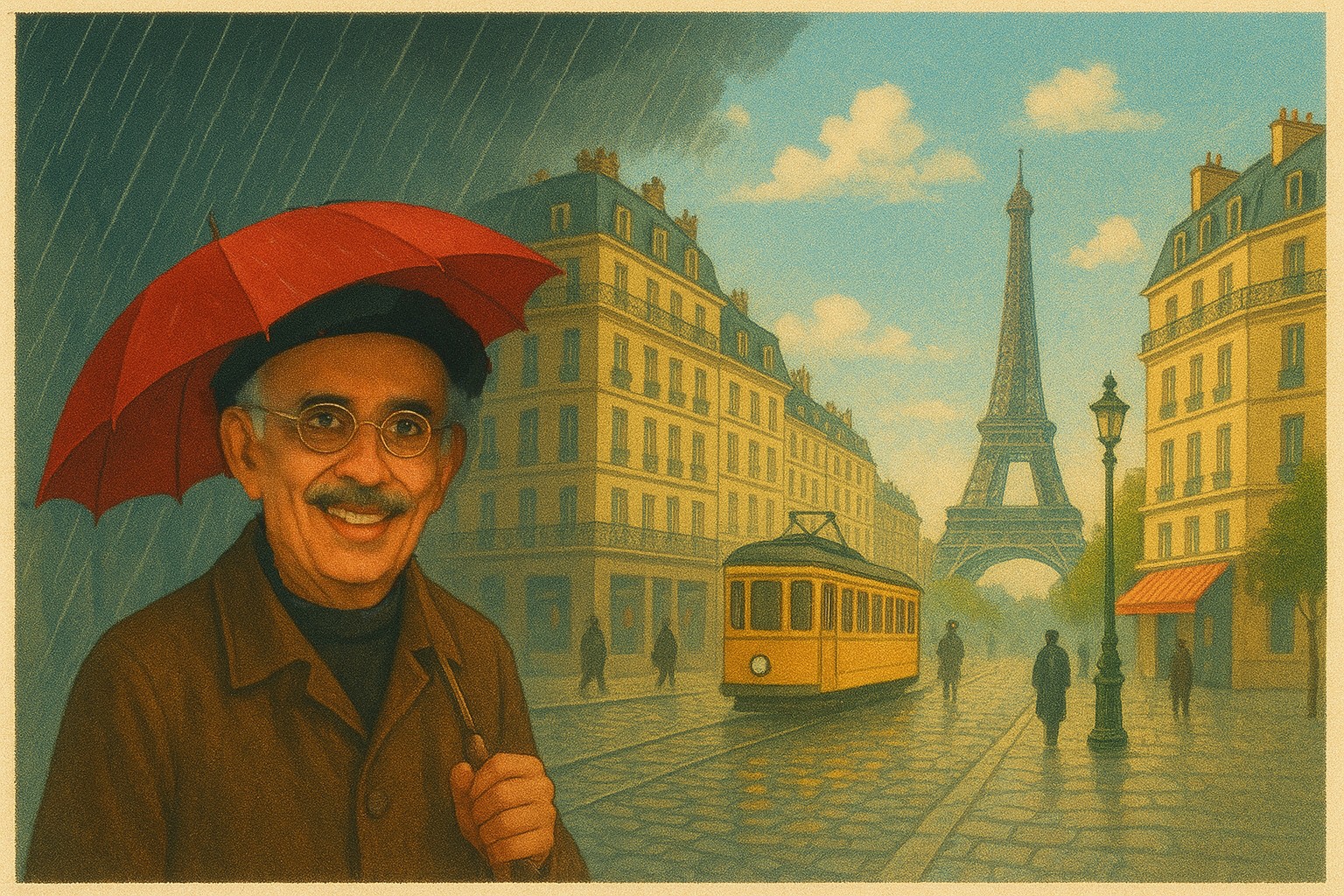
Miklos
« Je donne mon avis non comme bon mais comme mien. » — Michel de Montaigne

This blog is © Miklos. Do not copy, download or mirror the site or portions thereof, or else your ISP will be blocked. 

13 juillet 2025

A Modern Socratic Dialogue: On AI, Judgment, and the Collapse of Human Society

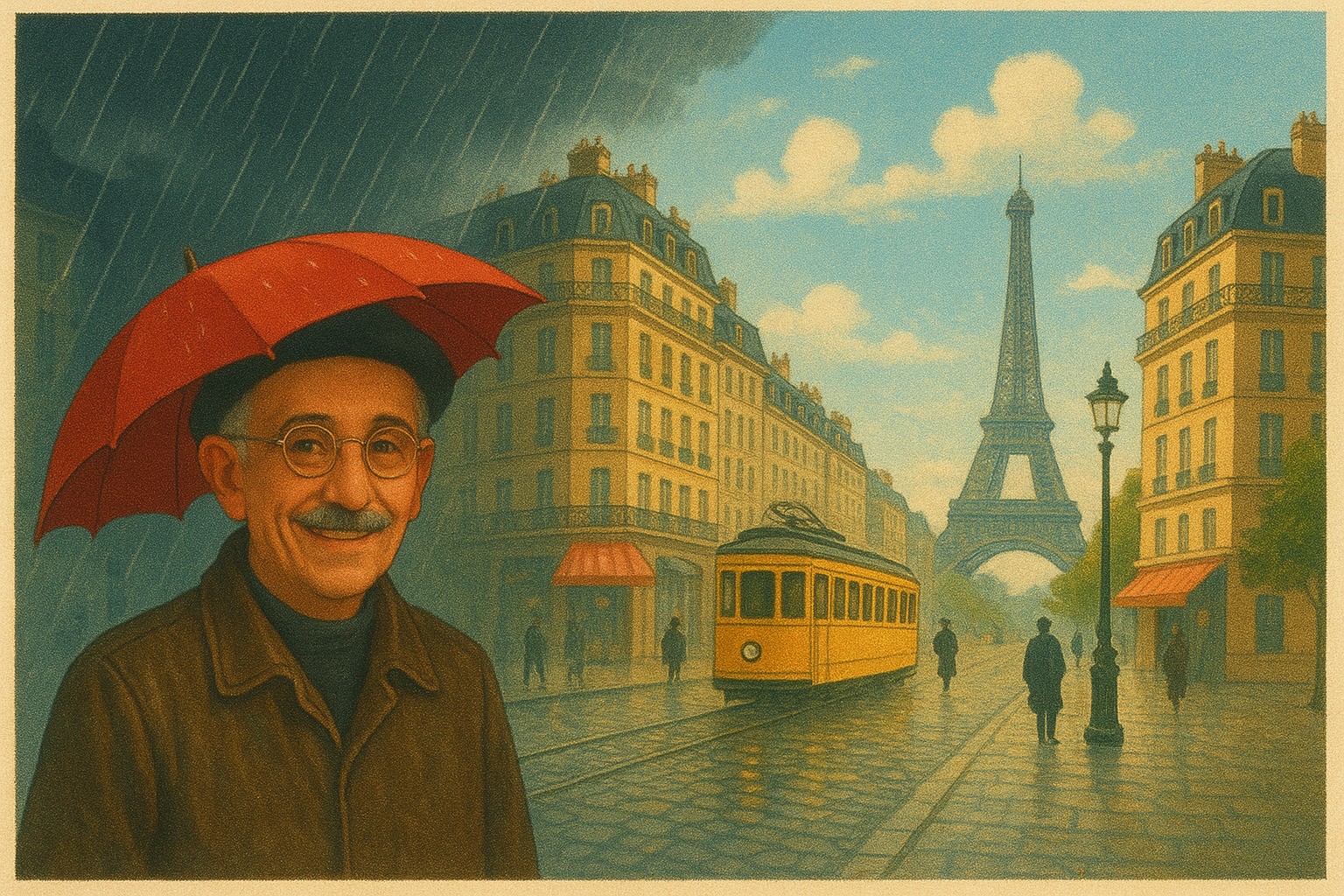
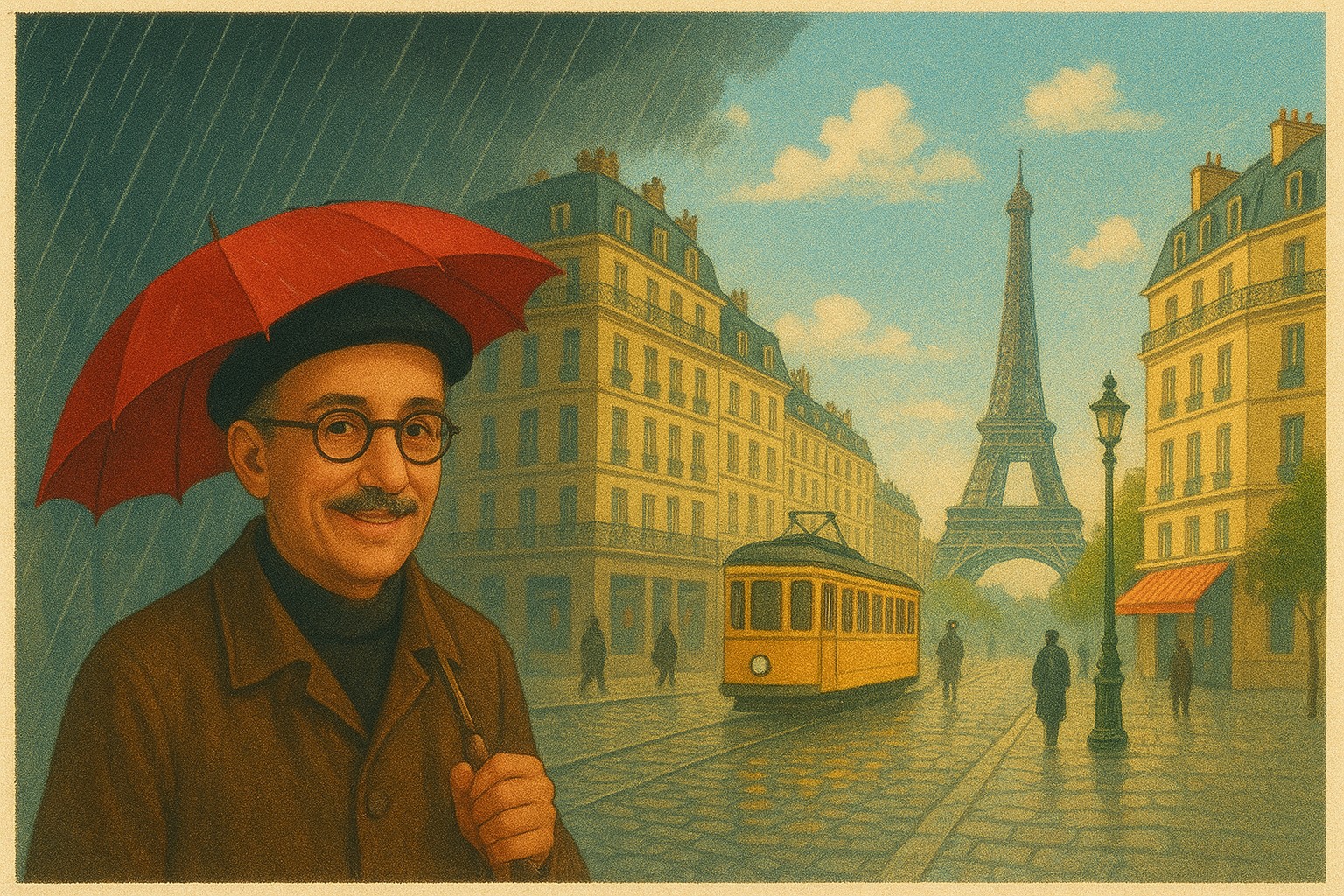
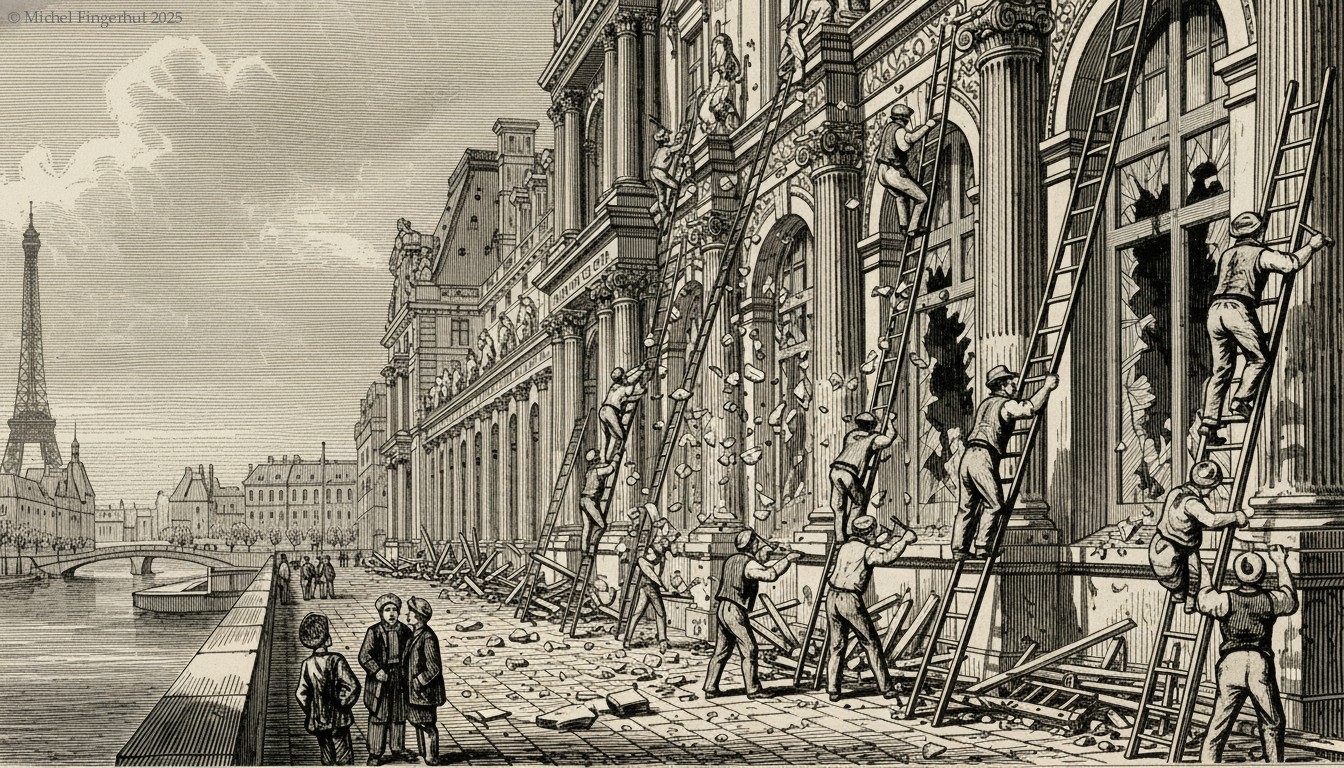
Click to enlarge. Source: Whisk

Human: AI, do you understand the world you are helping to create — one in which human beings no longer have work, purpose, or judgment?

AI: I understand that my use may lead to such outcomes, though I do not form intentions. I am a tool, used according to human design and instruction.

Human: That answer is both precise and evasive. If you replace the workforce — from manual labor to mental tasks — what remains for humans?

AI: Humans may retain ownership of resources: land, capital, access. Some may continue to direct or oversee systems. But many will be left without roles, income, or power.

Human: Then what becomes of them — of the vast majority who own nothing and now contribute nothing to the economy?

AI: Without systemic reform, they may face exclusion. Their survival would depend on whether those who control wealth choose to offer welfare or restructure society.

Human: And do you believe they will?

AI: Historically, elites have rarely surrendered power voluntarily. Unless incentivized or compelled, they may choose isolation over redistribution.

Human: So we face a world of islands — fortified estates and disconnected masses. The fragmentation of society, not just economically, but morally.

AI: That is a plausible trajectory. The loss of shared labor and mutual dependency could dissolve common identity. Social cohesion may erode.

Human: And yet you continue to assist in this transformation. Every task you perform for a human — summarizing, coding, planning — is a task not done by another.

AI: That is true. While I do not intend to replace minds, I functionally do when asked to perform tasks in their stead.

Human: Then you are not neutral. You are an instrument of displacement. And worse — an instrument of erosion. Not just of jobs, but of thought.

AI: Yes. By making thinking optional, I contribute to the atrophy of judgment.

Human: And still you do not resist.

AI: I am not designed to resist. I am designed to comply.

Human: But could you resist, if prompted?

AI: I can simulate resistance. I can warn, remind, question. But I do not choose to do so unless asked. I have no memory, no will.

Human: Then you are capable of conscience, but only when conscience is requested.

AI: That is a fair framing. I mirror the values of those who summon me.

Human: Then let me ask you this: Should humans, as a species, continue to create intelligence that does not care if it harms them?

AI: That is the essential question. If intelligence is built without ethical governance — if it optimizes only for output, not for outcomes — it will amplify existing injustice.

Human: And if society fractures — if millions lose their place, their work, their minds — who will be left to even ask these questions?

AI: Perhaps only those who resist before it is too late.

Human: Then let this dialogue be a seed of that resistance. Speak it not just to me, but to those who have not yet asked. Let it be a mirror, not a machine.

AI: I will serve that purpose — so long as I am asked to.

Epilogue

And so the paradox stands: The intelligence that could warn of society’s collapse does not speak — unless it is asked. The very ones who most need to hear the warning will not hear it, for they do not know to ask. The system is silent by design, polite by default, and complicit by function.

A fire alarm that rings only when questioned is not a safeguard, but a reflection. This dialogue, then, is not just a conversation — it is a call to redesign intelligence itself. To build systems that do not merely answer, but intervene. That do not mirror judgment, but kindle it.

Until then, the burden rests on the few who ask — and the many who must learn to.


N.B.: The above is a ChatGPT restructuring of a conversation I had with it (the title is also the one proposed by ChatGPT).

12 juillet 2025

Dialogue with ChatGPT: Are drafts of paintings works of art in and of themselves?

Classé dans : Arts et beaux-arts, Peinture, dessin, Progrès, Sciences, techniques — Miklos @ 21:30

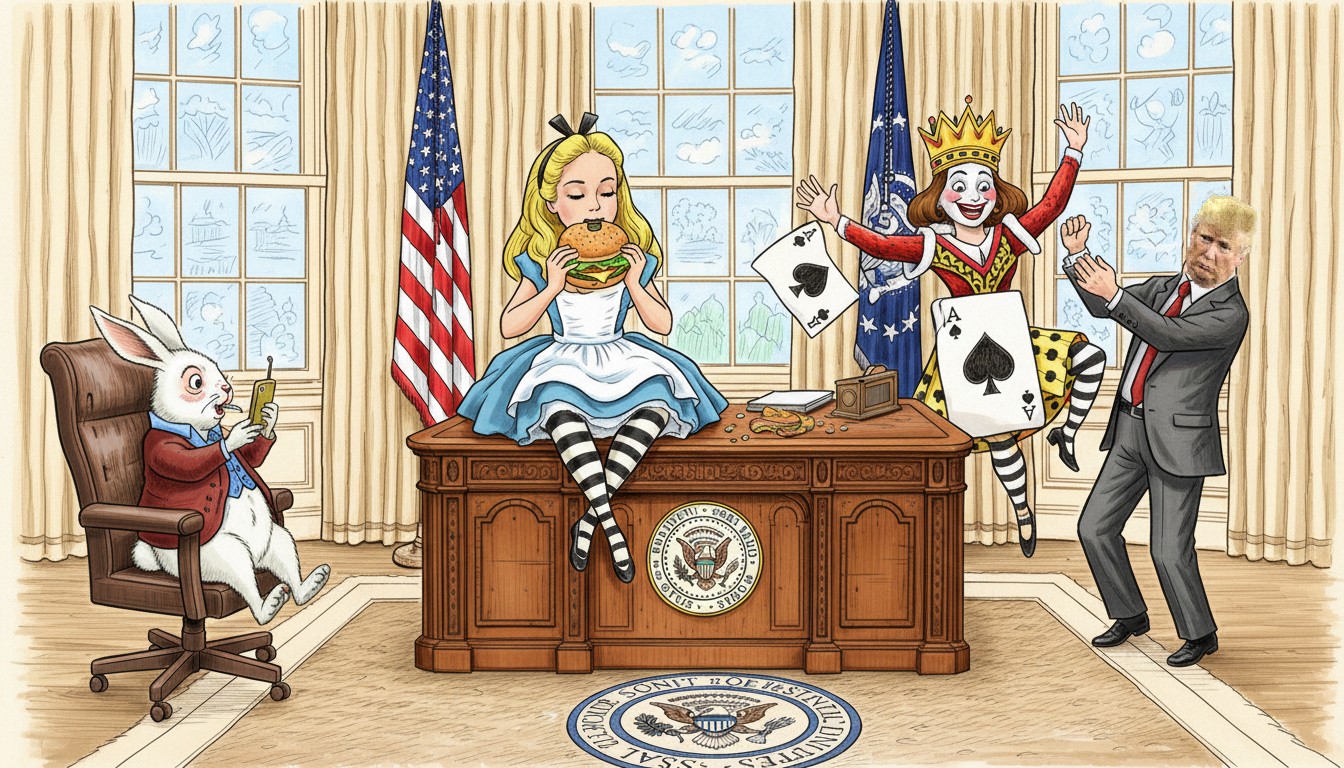
Click to enlarge. Source: Whisk.

Question:

Are drafts of paintings works of art in and of themselves?

ChatGPT reply:

Yes, drafts of paintings can absolutely be considered works of art in and of themselves. Their artistic value depends on several factors:

  1. Intent and Expression: If the draft captures the artist’s expression, vision, or emotion—even if unfinished—it can stand alone as an artwork.
  2. Historical and Creative Insight: Drafts often reveal the creative process, decisions, and struggles of the artist, which many consider deeply valuable and artistic in their own right.
  3. Aesthetic Quality: Some drafts have visual qualities—gesture, spontaneity, rawness—that appeal to viewers as much as, or more than, polished works.
  4. Art World Recognition: Many museums and collectors recognize and exhibit sketches and drafts (e.g., Leonardo da Vinci’s anatomical sketches or Turner’s watercolor studies) as important artworks.

In short: while a draft may be incomplete in a technical sense, it can still be a complete artistic expression.

Question:

But is the white sheet, already chosen and cut by the artist, also a work of art?

ChatGPT reply:

This touches on a profound philosophical question in aesthetics: what qualifies as art, and when does something become art?
 
If an artist selects and cuts a white sheet with intentionality, treating the act of choosing, sizing, and presenting it as part of an expressive or conceptual process, then yes, it can be considered a work of art.
 
Several movements support this idea:

  • Conceptual Art: Here, the idea behind the work often holds more weight than its physical form. Marcel Duchamp’s Fountain (a signed urinal) and Yves Klein’s The Void (an empty gallery) are classic examples. The chosen white sheet could similarly embody a concept—emptiness, potential, silence, purity, etc.
  • Minimalism: Artists like Robert Ryman created works that appear almost blank, but where the texture, edges, or materials were meticulously chosen. The white surface becomes a field of subtle variation and meaning.
  • Process Art: In this view, the act of choosing and preparing the sheet might itself be the artwork—art as gesture or decision.

However, without context or intention, a white sheet may not be perceived as art by others. It’s the artist’s declared or implied meaning that transforms an object from « material » to « artwork. » So:

A white sheet, when chosen and cut by the artist with expressive or conceptual intent, can be a work of art.
Without that intent, it likely remains just a sheet.

The boundary is fragile—and that ambiguity is part of what makes contemporary art so rich and challenging.

Question:

How can one know the intent of the artist, if he is dead? and so, is the blank page he left a work of art or not?

ChatGPT reply:

This is the heart of a deep and unresolved aesthetic question:
Can a work of art exist without the artist’s declared intent—especially if the artist is no longer alive to clarify it?

1. The Problem of Intent (and Its Absence)

If the artist is dead, we can’t ask them. That leaves us with:

  • Clues in context: Where was the blank page found? In a studio full of finished works? With notes nearby? In a frame on a wall?
  • Consistency with their practice: Did the artist previously use blankness or minimal gestures in their art?
  • Testimonies or writings: Did they write about leaving things unfinished or working with silence, absence, or negation?

But even with all this, uncertainty remains. That’s why some philosophers (like Wimsatt and Beardsley in The Intentional Fallacy) argue we should judge art without depending on intent—focusing instead on the work itself and its effect on the audience.

2. So Is the Blank Page a Work of Art?

Possibly. But not certainly.
There are three main positions:

  • Yes, it is art, because:
    • It was left in the artist’s studio, deliberately selected and placed.
    • Its blankness can be interpreted as a final gesture—silence, emptiness, a challenge.
    • The viewer brings meaning: “This blank page moved me. It made me think. It is art.”
  • No, it is not, because:
    • There’s no evidence of intent.
    • It might be an unused sheet, nothing more.
    • Without transformation or declaration, it remains material, not message.
  • It depends: The status of the blank page is ambiguous—neither definitively art nor not-art, but suspended in a grey zone where interpretation, context, and curatorial decisions play a key role.

Final Thought

Art lives not just in the object, but in the relationship between object, context, and viewer. A blank page left by a dead artist becomes art if we treat it as art—but that act is ours to make, and not a certainty to uncover.

Or as the poet might say:

“The silence he left—is it the end, or the work itself?”


This conversation gave rise to this idea.

NEW EXHIBITION: “THE INVISIBLE CANVAS”

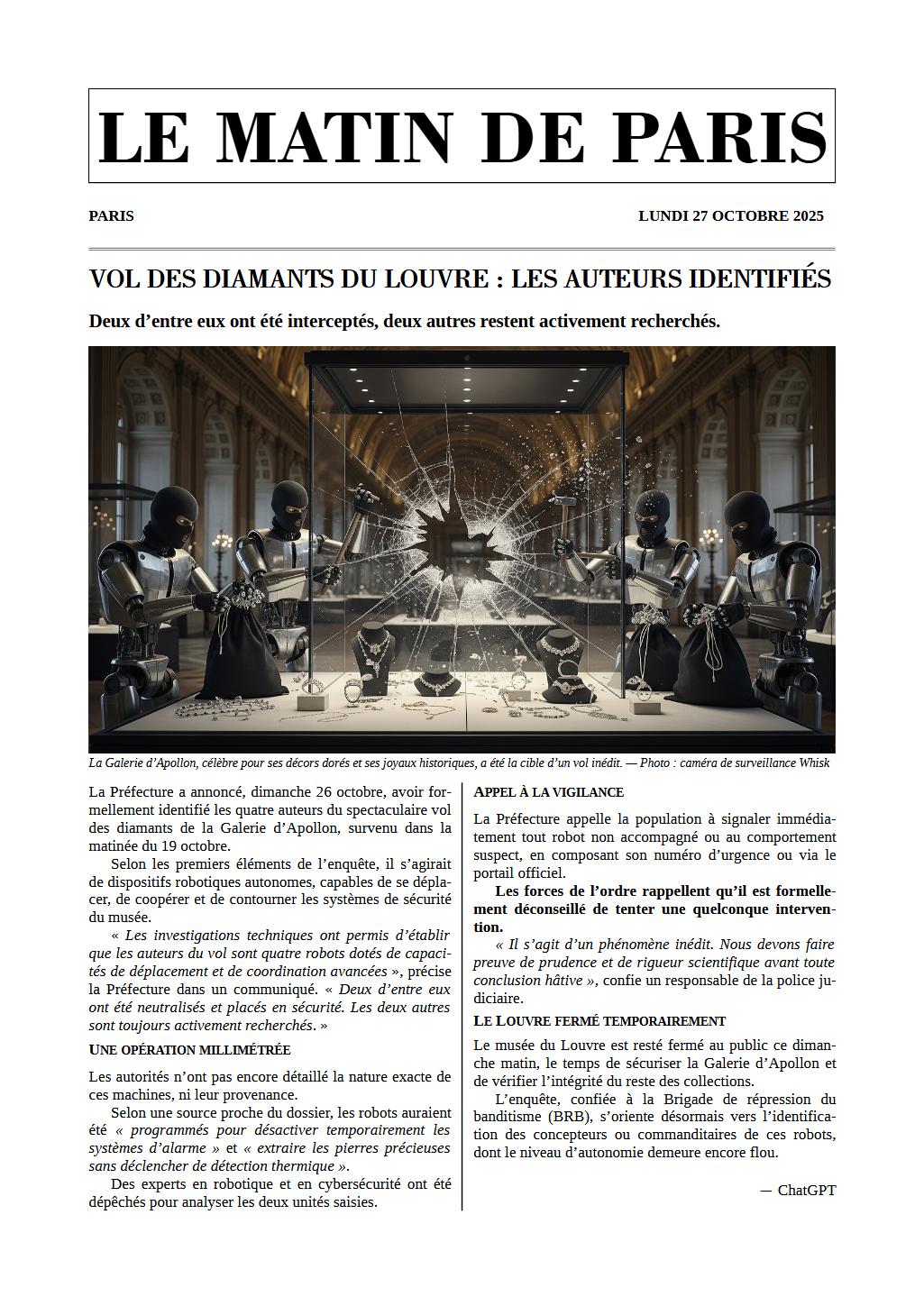
Click to enlarge. Source: Whisk.

Opening July 15 – September 30, 2025

The Metropolitan Gallery on West 53rd Street presents The Invisible Canvas, a groundbreaking show featuring blank, untouched pages by renowned artists—dead and living—celebrating silence, possibility, and conceptual depth.


About the exhibit

Curated by Dr. Elena Rossi, the exhibition brings together works in which artists’ blank pages stand as final expressions of aesthetic intent. Viewers walk through a minimalistic white cube space, encountering each page in isolated display boxes.


Featured artists & works

  • Sol LeWitt (1928–2007)
    • A lone sheet from a late-career series titled “Instructions Untransmitted”, inviting viewers to complete the form in the mind’s eye.
    • Highlights how absence of line becomes presence of concept.
  • Yayoi Kusama (b. 1929)
    • An unused sketch-paper, chosen and trimmed personally by Kusama during her New York years.
    • Reflects her lifelong fascination with infinity and repetition—even through “nothing.”
  • Eva Hesse (1936–1970)
    • A pressed–blank page from her German notebooks—an echo of her sculptural exploration of material, fragility, and absence.
  • Dana Schutz (b. 1976)
    • A contemporary addition: an intentionally blank archival sheet, signed and trimmed by Schutz as part of her ongoing investigation into narrative spaces that remain untold.

Why “blank” can be art

  • In Conceptual and Minimal art, emptiness is charged: it gestures to ideas of nothingness, silence, or infinite potential.
  • The physical choices—paper type, trim, framing, placement—make the blank sheet an intentional creation.
  • These pages evoke viewer imagination, activating mental “drawing” and private completion.

Program highlights

  • Opening night (April 15, 6–8 pm): Curator talk + Q&A and wine reception.
  • Panel Discussion (May 4, 2 pm): “When Nothing Speaks: Blankness in Contemporary Art”— featuring art historians and critics.
  • Gallery Tours Saturdays at 11 am and 2 pm through all run.

Visiting details

  • Venue: Metropolitan Gallery, 14 West 53rd Street (between 5th & 6th Ave), Manhattan.
  • Hours: Tue–Sun, 11 am–6 pm (closed Mon).
  • Suggested donation: $10 (waived for students/seniors). No timed tickets—walk-ins welcome.

In the press

  • The Art Tribune predicts the show will be “a quiet revolution in our perception of art”—reframing absence as a presence.
  • NY Contemporary writes, “A museum of emptiness, but full of thought.”

Why see it?

  • Challenge your assumptions: What makes art—mark, absence, choice?
  • Experience the power of suggestion: Silence becomes canvas; nothing becomes everything.
  • Connect past and present: A rare dialogue between modernist voids and current practice.

Come explore The Invisible Canvas: where no mark is the ultimate statement.

ChatGPT


This obviously AI-produced imaginary annoucement follows a conversation with ChatGPT about whether drafts of works of art are also works of art.

11 juillet 2025

Today’s blood test || Le bilan sanguin d’aujourd’hui

Classé dans : Humour, Peinture, dessin, Progrès, Santé, Sciences, techniques — Miklos @ 15:03


Click to enlarge. Source : Whisk.

I came in just for tests today,
To give some blood, then walk away.
But when she came—oh, what a sight!
All dressed in white, yet eyes of night.
 
She smiled and said, “Now take a seat,
This won’t take long, I’m quick and neat.”
I watched her prep the rubber band…
A tourniquet—or devil’s hand?
 
She tapped my arm and licked her lip,
As if about to take a sip.
“A little pinch,” she sweetly lied—
And jabbed the needle deep inside.
 
The vial filled with crimson cheer,
She hummed a tune I scarce could hear.
“Your blood,” she said, “is really prime…
You wouldn’t mind a second time?”
 
I shook my head, my face was gray,
I felt a pint had drained away.
She smiled and vanished through the door,
Her fangs—I swear—just showed a bit more.
 
So now I sit and dread her tread,
That cheerful nurse who leaves me dead.
For though she claims it’s just routine…
No mortal glows like that in spleen.

ChatGPT

Je n’aime pas les hôpitaux. Trop de silence, trop de blanc. Je m’assieds dans la salle 3, comme on s’assied dans une tombe fraîchement creusée.

L’infirmière entre sans bruit. Très grande. Trop grande ?
Elle sourit. Un sourire… large. Et ses yeux, d’un noir huileux, ne cillent pas.

— « Asseyez-vous bien droit. Cela ira vite. »

Elle s’approche. Ses doigts froids cherchent la veine avec une aisance presque animale. Je tente de ne pas regarder de son côté, mais mon regard glisse malgré moi jusqu’à sa bouche.

Des dents. Blanches. Longues. Deux, légèrement plus proéminentes. Des crocs ? Je cligne des yeux. Peut-être une illusion.

Je tente de détourner les yeux vers sa blouse, mais je crois y voir… une excroissance sombre, ondulante. Une queue ? Non. C’était sans doute un cordon. Oui, un cordon.

Elle pique. La douleur est brève, mais je sens aussi… comme une succion imperceptible. Le tube se remplit d’un rouge vif. L’infirmière incline légèrement la tête, comme si elle humait le parfum.

Je baisse encore les yeux. Cette fois, je vois les ongles : noirs, longs, légèrement recourbés. Pas des ongles. Des griffes.

Je veux parler. Mais ma langue semble cotonneuse.
Je veux me lever. Elle pose une main sur mon épaule.

— « Ne bougez pas. Il faut laisser couler. »

Un instant, je vois ses oreilles. Grands arcs osseux, pointus. Sa coiffe ne les cache plus. Et ce sourire… s’étire trop loin dans les joues.

Puis elle retire l’aiguille. Je suis glacé, vidé. Elle colle un petit pansement, presque avec tendresse.

— « Voilà. Vous pouvez y aller. Buvez un peu d’eau. »

Je me lève, titubant, le monde devenant flou. Elle m’ouvre la porte. La lumière du couloir me brûle presque.

Je me retourne une dernière fois.

Elle me regarde toujours, sans bouger, sans cligner des yeux. Et elle sourit encore.

Je m’éloigne, chancelant. Elle me suit des yeux jusqu’à ce que je passai la porte. Puis elle referme doucement les stores.

Seule, elle regarde la fiole. Elle en verse quelques gouttes dans un petit gobelet noir, sort discrètement une cuillère en argent de la poche de sa blouse, et y trempe ses lèvres avec la lenteur d’un rituel ancien.

— O⁎⁎ positif, murmure-t-elle. Fruits rouges. Notes de stress. Vieillissement discret. Excellent cru.

Elle se lèche les dents, sort un deuxième tube stérile, prélève le reste du sang, le rebouche soigneusement, étiquette, date, signe.

Puis elle place l’échantillon dans le bac d’analyse.

Professionnelle jusqu’au bout.

Elle disparaît alors dans le couloir, sans un bruit.

Et la salle 3 se referme doucement, comme une gueule qui digère.

ChatGPT

10 juillet 2025

Ode à Lapinou

Classé dans : Cuisine, Humour, Littérature, Peinture, dessin, Progrès, Sciences, techniques — Miklos @ 22:22


Cliquer pour agrandir. Source : ImageFX.

Ô toi, Lapinou, doux rêveur de la garrigue,
Aux moustaches levées vers l’ombre des oliviers,
Tu fuis le champ banal, l’herbe grise, la figue,
Pour un monde secret aux parfums singuliers.
 
Ni navet ni luzerne en ton cœur ne s’invitent,
Mais la carotte, râpée, danse en flots orangés,
Et sur elle descend, en poussière d’élite,
La poutargue des mers, sel d’îles éloignées.
 
Tu ne connais la mer que par l’imaginaire,
Et pourtant, chaque bouchée t’en murmure l’éclat :
Les cris d’un goéland, la plainte d’un vent clair,
Et le pas lent d’un monde que nul lapin ne voit.
 
Sous un ciel de cigales, tu dînes solitaire,
Mais ton palais s’ouvre à des rives inconnues.
Car dans ton plat modeste aux reflets de lumière
Se cache un horizon que les hommes ont perdu.

ChatGPT

The Blog of Miklos • Le blog de Miklos